Metal roofing has become a popular choice for homeowners who want a durable roof with a clean, modern look. It is also a bigger upfront investment than most shingle roofs, so it deserves a careful conversation. We explain the main metal roof types, what they are good at and where their limits are, so you can decide whether metal fits your home and budget.
Problems this service addresses
Homeowners usually look at metal roofing when they want:
- Long-term durability. A roof covering that is often expected to outlast typical asphalt shingles when properly installed and maintained.
- Wind performance. Panel systems that can be engineered for high wind ratings, which matters near the Gulf Coast.
- Reflective finishes. Lighter or coated finishes that reflect more sunlight than dark shingles.
- A different look. The clean lines of standing seam panels on modern, farmhouse or traditional homes.
- Outbuildings and porches. Metal on patios, porches, garages and shops, sometimes paired with a shingle main roof.
What's included
The exact scope depends on your roof and is listed in your written estimate. Typical work includes:
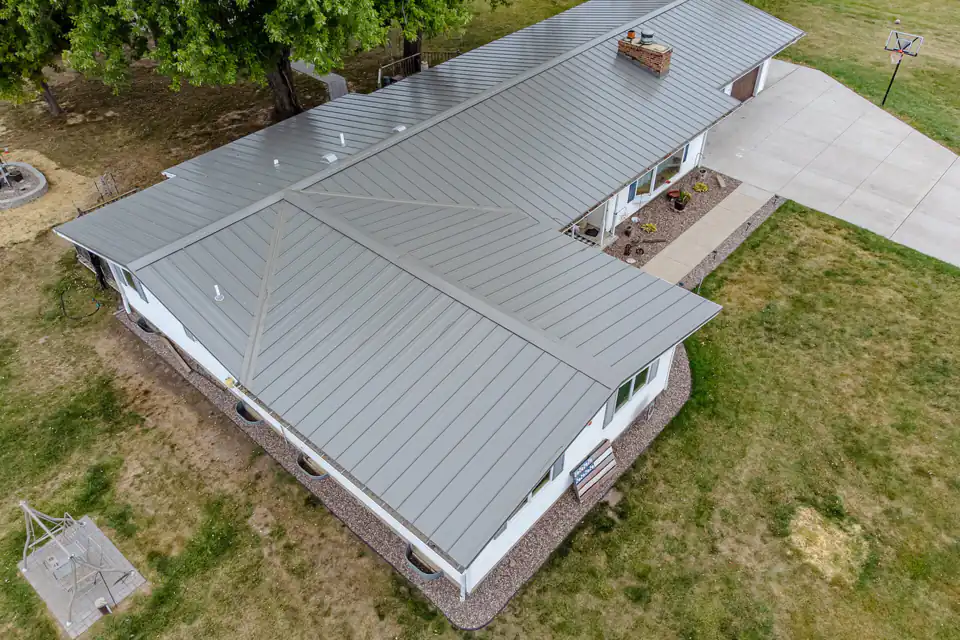
- Guidance on standing seam versus exposed-fastener panel systems
- Panel material, gauge and finish options from available suppliers
- Removal of existing roofing and deck inspection
- Underlayment suited to metal roofing, as specified by the panel manufacturer
- Trim, flashing, ridge and penetration details designed for metal
- Installation following the panel manufacturer's instructions
What affects the cost
Every roof is different, so pricing is based on an inspection rather than a flat rate. The main factors are:
- Panel system: standing seam generally costs more than exposed-fastener panels
- Metal type, thickness and paint or coating system
- Roof size and complexity, including valleys, dormers and penetrations
- Tear-off, decking condition and underlayment
- Custom trim, flashing and color choices
- Lead time for ordering panels and trim
Your estimate itemizes these so you can see what you are paying for.
The typical process
Consultation and inspection
We inspect the existing roof and discuss your goals, budget and the look you want.
System selection
We explain the options for panel type, color and finish, and how each affects cost.
Written estimate
A detailed scope covers panels, underlayment, trim, flashing and any decking work.
Material ordering
Metal panels and trim often need to be ordered or fabricated, which affects scheduling.
Installation and review
The roof is installed as scheduled, weather permitting, and we walk you through the finished work.
Metal Roofing FAQs
Answers here are general. Your situation depends on your roof's condition, which an inspection confirms.
Is a metal roof noisy in the rain?
With solid decking, underlayment and attic insulation beneath it, most homeowners find a metal roof is not much louder than shingles. Metal installed over open framing, such as on a barn, is noisier.
Does a metal roof make a house hotter?
Metal itself does not trap heat the way people sometimes expect. Light-colored and reflective coated finishes can reflect more sunlight than dark shingles. Overall attic temperature also depends heavily on ventilation and insulation.
Can metal roofing be installed over shingles?
Some systems allow it in certain situations, but it hides the condition of the deck and may conflict with manufacturer or local requirements. We usually recommend removal so the deck can be inspected.
Is metal roofing worth the higher cost?
It depends on how long you plan to stay in the home, your budget and your priorities. Our comparison of asphalt shingles and metal roofing walks through the trade-offs.