A small roofing problem rarely stays small. Water that gets past one lifted shingle or a cracked pipe boot can travel along the decking and show up as a ceiling stain several feet away. Our roof repair service is about finding where water or damage actually starts, fixing that point properly and telling you plainly whether the rest of the roof has life left in it.
Problems this service addresses
Repairs are usually the right call when the problem is limited to one area and the surrounding roof is still in serviceable condition. Common repair situations include:
- Active or recurring leaks. Stains on ceilings or walls, drips in the attic, or damp insulation after heavy rain.
- Missing, cracked or lifted shingles. Often caused by wind, age or fasteners that have backed out over time.
- Flashing failures. Loose, rusted or poorly sealed flashing around chimneys, walls, skylights and valleys.
- Pipe boots and roof vents. Rubber collars around plumbing vents can crack in sun and heat, letting water run down the pipe.
- Damaged decking in a small area. Soft or sagging spots where water has been getting in for some time.
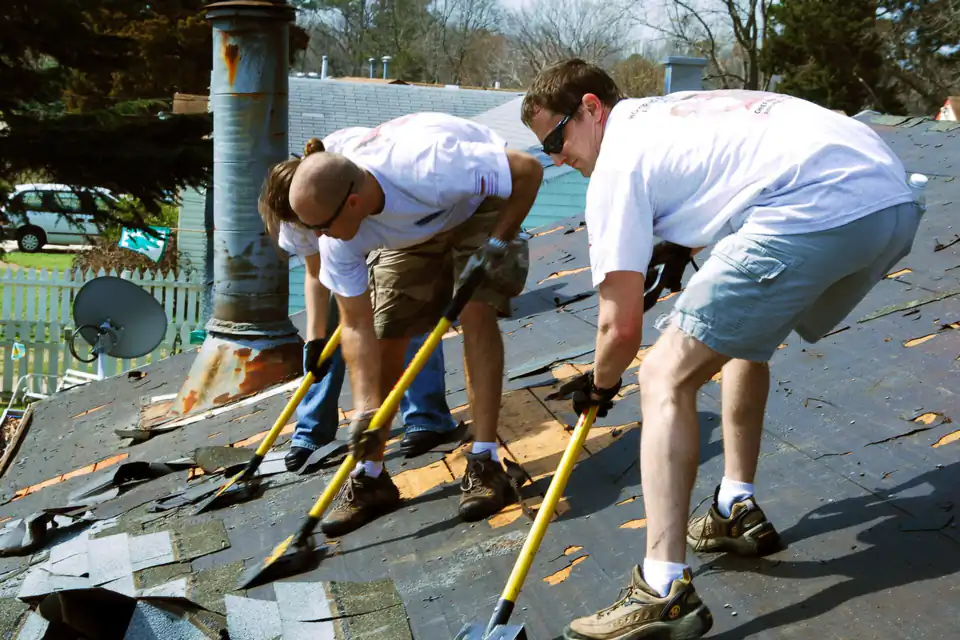
What's included
The exact scope depends on your roof and is listed in your written estimate. Typical work includes:
- Locating the source of a leak, not just the spot where it appears inside
- Replacing missing, cracked or creased shingles and matching them as closely as available materials allow
- Resealing or replacing flashing at walls, chimneys, valleys and roof penetrations
- Replacing worn pipe boots, vent covers and similar components
- Replacing small sections of damaged decking when the inspection shows it is needed
- Photos and a written description of what was found and what was repaired
What affects the cost
Every roof is different, so pricing is based on an inspection rather than a flat rate. The main factors are:
- How far water has spread and whether decking or underlayment must be replaced
- The roofing material and whether matching shingles or panels are still available
- Roof pitch, height and how easily the area can be reached safely
- Number of penetrations, valleys or wall intersections involved
- Whether the problem is one isolated spot or several separate areas
Your estimate itemizes these so you can see what you are paying for.
The typical process
Tell us what you are seeing
Call or send the estimate form with what you have noticed, when it happens and roughly where. Photos taken safely from the ground or inside the house help.
Inspection of the problem area
We look at the roof surface, flashing and, when accessible, the attic to trace the source.
Clear repair recommendation
You receive a written description of the problem, the proposed repair and the price before any work begins.
Repair and clean-up
The repair is completed, debris is removed and we share photos of the finished work.
Roof Repair FAQs
Answers here are general. Your situation depends on your roof's condition, which an inspection confirms.
Can you repair a roof without replacing it?
Often, yes. If the damage is limited to one area and the rest of the roof is in reasonable condition, a targeted repair is usually the sensible option. If an inspection shows widespread wear, we will explain why a repair may only be a short-term fix so you can decide with full information.
Will repaired shingles match my existing roof?
We aim for the closest available match in color and profile. Older shingle lines are sometimes discontinued, and new shingles can look slightly different from weathered ones at first. We will tell you before the work if an exact match is not possible.
What should I do while I wait for a repair?
Stay off the roof. Move belongings away from the leak, place a container under drips and, if water is collecting in a bulging ceiling, keep people clear of that area. Take photos for your records.
How long does a typical roof repair take?
Many single-area repairs are finished in one visit, but timing depends on the size of the repair, materials and weather. We will give you an expected timeframe with your estimate.