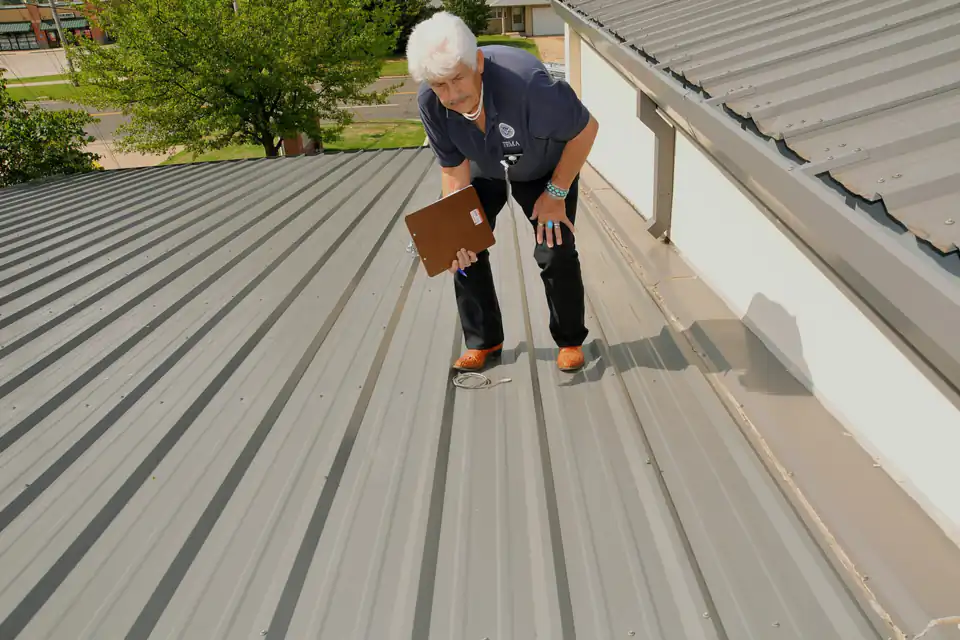
Friendswood sits close to the upper Texas Gulf Coast, so strong thunderstorms, gusty winds and tropical systems are part of life here. After a storm, roof damage is not always visible from the ground. We inspect the roof, document what we find with photos and explain the repair options so you can make decisions and, if you choose, share the documentation with your insurer.
Problems this service addresses
Storm-related roof problems we commonly look for include:
- Wind damage. Missing, creased or lifted shingles, loosened ridge caps and displaced flashing.
- Hail impacts. Bruised or cracked shingles, dented metal components and granule loss that can shorten roof life.
- Fallen limbs and debris. Punctures, broken decking or damage to gutters and edges.
- Wind-driven rain. Water forced under shingles or flashing that shows up as new interior leaks.
- Hidden damage. Problems that are only visible on the roof surface or from the attic.
What's included
The exact scope depends on your roof and is listed in your written estimate. Typical work includes:
- Storm damage inspection of the roof surface, flashing, vents, edges and gutters
- Dated photo documentation of damage you can keep for your records
- Temporary protection, such as tarping, when it is safe and appropriate to do so
- Repair of damaged shingles, flashing, vents and decking
- Full replacement estimates when damage is widespread
- A written scope you can share with your insurance company if you decide to file a claim
What affects the cost
Every roof is different, so pricing is based on an inspection rather than a flat rate. The main factors are:
- Type and extent of damage, and whether interior water damage is involved
- Whether temporary protection is needed before permanent repairs
- Material availability and matching for partial repairs
- Decking or structural damage discovered once damaged materials are removed
- Scheduling demand and weather after a widespread storm
Your estimate itemizes these so you can see what you are paying for.
The typical process
Make sure everyone is safe
Stay away from downed power lines and do not climb onto a wet or damaged roof. Contact emergency services for immediate hazards.
Contact us
Call or send the estimate form with what happened and what you are seeing. Photos from the ground or inside help us prepare.
Inspection and documentation
We inspect the roof and record damage with photos and notes.
Temporary protection if needed
When a roof is open to the weather and it is safe to work, we can discuss temporary measures until permanent repairs are made.
Repair or replacement
You receive a written estimate. Once approved and scheduled, the work is completed and documented.
Storm Damage Roof Repair FAQs
Answers here are general. Your situation depends on your roof's condition, which an inspection confirms.
Should I call my insurance company or a roofer first?
That is your decision, and many homeowners do both. Review your policy and your insurer's instructions. An inspection can help you understand whether there is roof damage worth reporting. We do not act as a public adjuster or negotiate claims.
Can you guarantee my insurance claim will be approved?
No. Coverage decisions belong to your insurance company and depend on your policy. We can provide photos and a written description of the damage we find.
Will you waive or cover my deductible?
No. Texas law prohibits contractors from paying, waiving or rebating a homeowner's insurance deductible, and you should be cautious of anyone who offers to.
Can you come out during a storm?
Roof work is not safe during lightning, high wind or heavy rain. Inspections and repairs are scheduled once conditions are safe. Call us to discuss timing.
Do I need a windstorm inspection?
If your home is in the Galveston County part of Friendswood and is insured, or may be insured, through the Texas Windstorm Insurance Association (TWIA), roofing work may need a Texas Department of Insurance windstorm inspection. Check with your insurer or agent before work starts and tell us so it can be planned for.