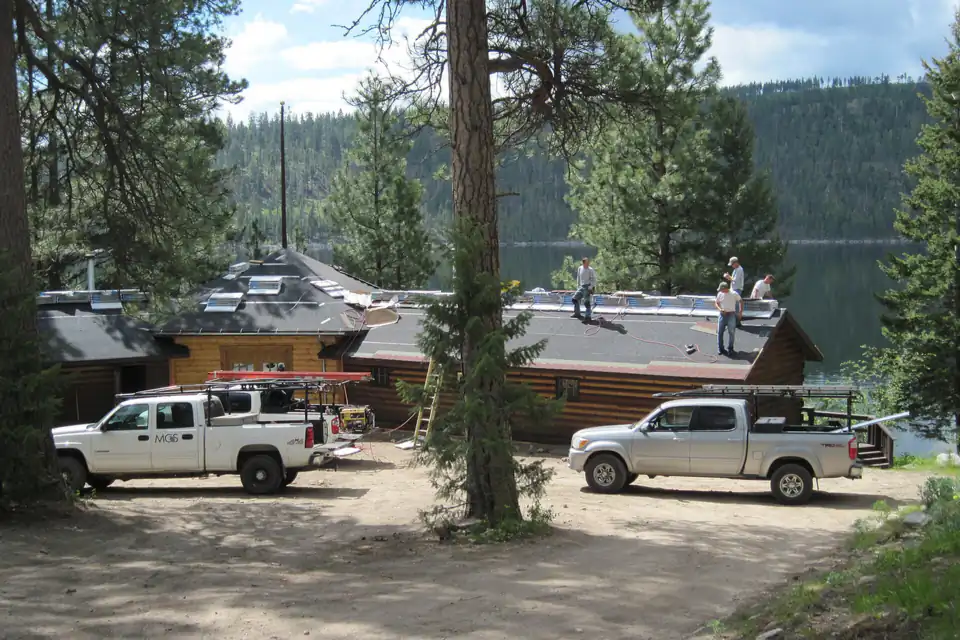
The best way to choose among Friendswood roofers is to compare them on evidence, not on who knocks first or promises the most. Get at least two or three written estimates, ask each contractor the same questions, confirm insurance and local presence, and be wary of anyone who pressures you to sign quickly, especially right after a storm.
A roof is a large investment and a hard one to judge from the ground. Most homeowners only replace a roof once or twice, so it is normal not to know what a good proposal looks like. This guide gives you a practical way to compare contractors so you can make the decision with confidence.
Start with what you actually need
Before calling anyone, write down what prompted the call. Is there an active leak? Did a storm pass through? Is the roof simply getting older? Notes about when a problem appears (only in heavy rain, only with wind from one direction) and photos taken safely from the ground or inside the attic help any contractor give you a more accurate assessment. Our Roofing Project Planner can help you organize those details into a short summary.
Knowing your goal also helps you spot a mismatch. If you called about a small leak and the first contractor immediately pushes a full replacement without explaining why, ask for the evidence. Sometimes replacement is the right answer, but you should be able to see the reasons in photos and plain language. Our guide to deciding between roof repair and replacement explains the usual signs.
Questions to ask every roofing contractor
Ask each company the same set of questions so their answers are easy to compare:
- Do you carry general liability insurance, and do you cover your workers? Ask for a certificate of insurance, and check that the policy is current. This protects you if someone is injured or your property is damaged during the job.
- Who will actually do the work? Some companies use their own crews, others use subcontractors. Either can work well, but you should know who is on your roof and who supervises them.
- Will you pull any permits that are required? Permit requirements can vary, so ask the contractor how they handle them and confirm with the City of Friendswood if you are unsure.
- How do you handle decking you cannot see until tear-off? A clear contractor will explain how damaged decking is identified, documented and priced, ideally as a per-sheet price written into the estimate.
- What happens if it rains during the project? Ask how the roof is protected overnight and during weather delays.
- What warranty applies to the materials and to the workmanship? Ask for the terms in writing, including what is and is not covered and for how long.
- How will you protect my property? Landscaping, driveways, pools, attic contents and vehicles all deserve a plan.
What a good written estimate includes
A verbal number or a one-line quote makes comparison almost impossible. A useful estimate should describe:
- The scope of work, including whether the existing roof will be removed down to the deck.
- The specific roofing material, product line and color, plus underlayment, drip edge, flashing, pipe boots, ventilation and ridge components.
- How damaged decking will be handled and priced.
- Clean-up and disposal, including a magnetic sweep for nails.
- The payment schedule and the total price, with any allowances or exclusions spelled out.
- An expected start window and duration, noting that weather can change it.
When two estimates differ significantly in price, line them up side by side. Often the difference is not the shingle brand but items like underlayment type, ventilation work, flashing replacement or whether decking repairs are included. A lower price that leaves out flashing or ventilation may not be the better value.
Local knowledge matters
Friendswood sits close to the upper Texas Gulf Coast. Roofs here deal with heat, humidity, heavy rain, strong thunderstorms and the June-through-November Atlantic hurricane season. A contractor familiar with the area should be comfortable talking about wind resistance, ventilation in hot attics and how to keep a roof protected if a storm arrives mid-project.
The city also spans two counties. Homes on the Galveston County side are within the Texas Department of Insurance's designated catastrophe area for windstorm coverage. If your home is insured, or might be insured, through the Texas Windstorm Insurance Association (TWIA), roofing work may need a windstorm inspection. A contractor working locally should know to raise this, but check with your insurer or agent and the Texas Department of Insurance windstorm resources before work begins.
Red flags, especially after a storm
After severe weather, Friendswood neighborhoods can see a wave of door-to-door roofing solicitations. Many of these companies are legitimate, but storms also attract operators who are gone before warranty questions come up. Slow down if you hear any of the following:
- Pressure to sign today. A fair offer will still be there after you compare it with others.
- An offer to pay or waive your insurance deductible. Texas law prohibits contractors from paying, waiving or rebating a homeowner's deductible on an insurance-funded job. See Texas Business & Commerce Code Chapter 27.
- A request to sign over control of your claim. A roofing contractor should not act as your adjuster or negotiate your claim for you. Read anything you sign carefully.
- Large upfront payments in cash. Payment schedules vary, but be cautious of demands for most of the price before materials even arrive.
- No physical documentation. No written estimate, no certificate of insurance and no clear way to reach the company later.
- Damage you cannot verify. Ask for photos of any damage someone reports finding on your roof, and do not let anyone on your roof without your permission.
How to compare reviews and references fairly
Online reviews can help, but read them for patterns rather than star counts. Look at how a company responds to complaints and whether reviews mention communication, clean-up and how problems were handled after the job. If a company offers references, ask whether the work was similar to yours and how the roof has held up since.
Be cautious with any review, badge or testimonial you cannot trace to a real customer or a verifiable source. It is reasonable to ask a contractor how you can confirm a claim they make about their experience or credentials.
Making the decision
Once you have your estimates, step back and ask three questions. Which contractor explained the problem most clearly? Which estimate is the most complete and specific? Which company do you trust to answer the phone if something goes wrong a year from now? The best choice is often the one that scores well on all three, not the one with the lowest number.
If you would like an estimate from us, you can send a request online or call. We will explain what we see, put the scope and pricing in writing and give you time to compare. To learn more about our approach, visit the About page, or browse our roofing services.